There is nothing quite like the relief of stepping into a crisp, cool car on a scorching afternoon. But when that refreshing breeze suddenly turns into a blast of warm, stagnant air, it can turn any commute into an uncomfortable ordeal.
At Auto Point Plus, we believe in empowering our customers. Understanding how your vehicle's air conditioning system operates helps you spot minor issues before they turn into costly repairs. Here is everything you need to know about what keeps your cabin cool, and the warning signs that indicate it’s time for a service.
What’s Under the Hood: The Core AC Components
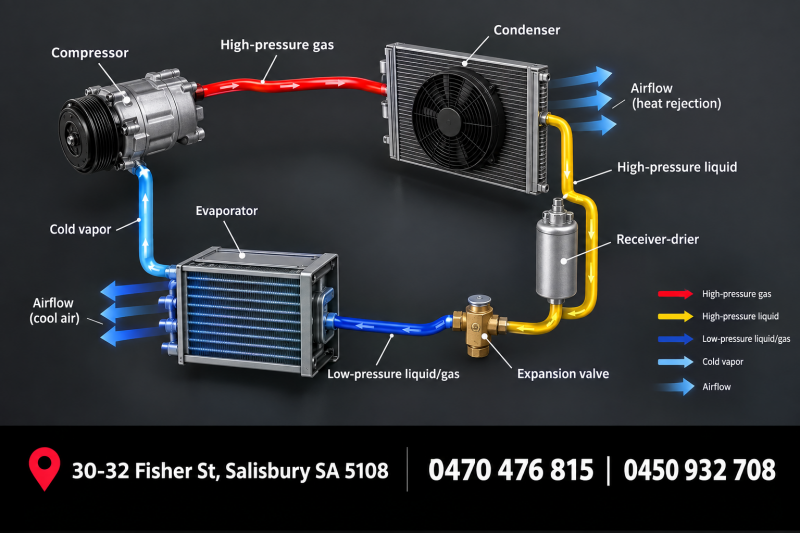
Your car's air conditioning isn't just a powerful fan; it is a completely sealed, pressurized loop that relies on a specific sequence of parts working in perfect harmony to remove heat from the cabin.
-
The Compressor: The powerhouse of the system. Driven by your engine’s belt, it pressurizes the refrigerant gas and pumps it through the entire loop.
-
The Condenser: Positioned at the very front of your car. It acts like a mini-radiator, using outside airflow to cool the hot, high-pressure gas from the compressor back into a liquid state.
-
The Receiver/Drier: The system's safeguard. It temporarily stores the liquid refrigerant and uses drying agents to absorb any harmful moisture or debris that could freeze and damage the lines.
-
The Expansion Valve: The pressure dropper. By restricting the flow of the high-pressure liquid, it forces the refrigerant to rapidly expand and drastically drop in temperature.
-
The Evaporator: The cooling core hidden behind your dashboard. As the super-cold refrigerant passes through it, your car's blower motor pushes warm cabin air across the freezing fins, delivering that ice-cold breeze right to your face.
5 Warning Signs Your AC System is Failing
Because the AC system is a sealed loop, it shouldn't just "run out" of refrigerant. When it stops blowing cold, there is usually an underlying issue. Look out for these five common warning signs:
-
Blowing Warm or Lukewarm Air: The most obvious sign of a struggling system. This typically points to a refrigerant leak or a failed compressor clutch that isn't engaging to pressurize the system.
-
Weak Airflow: If the air is cold but barely pushing through the vents on the highest fan setting, you likely have a failing blower motor or a severely clogged cabin air filter restricting the air.
-
Strange Noises: Your AC should operate quietly. A loud squealing sound points to a slipping serpentine belt, while a harsh grinding or rattling noise indicates failing internal bearings in the compressor.
-
Unpleasant Odors: A musty or mildew smell means moisture is trapped inside the evaporator case behind your dash. A sweet, chemical smell usually indicates a refrigerant leak inside the cabin.
-
Water Leaking Inside the Cabin: While water dripping under your car is normal condensation, wet floor mats inside the cabin mean your AC drain tube is clogged and backing up into the dashboard.
Trust Your Vehicle to the Experts
When your AC starts showing signs of fatigue, you need a mechanic who will get to the root of the problem without upselling you on unnecessary repairs.
At Auto Point Plus, we take pride in doing the job properly and treating our customers with respect. We have built our reputation on being honest, reliable, and highly knowledgeable. Whether you need a simple cabin air filter replacement, a comprehensive AC diagnostic, or major mechanical repairs, our team ensures the process is easy, stress-free, and fairly priced.
Don't sweat through your next drive. If you are experiencing any of the warning signs above, contact Auto Point Plus today to book your expert AC service and get back to cruising in comfort.
Add comment
Comments